JAY KNOCKING ON DOORS TO HOLD DOWN WATER BILLS
Town officials are preparing to go door-to-door in an effort to prove what they say many residents already know: people living in the hamlets of Au Sable Forks, Upper Jay and Jay are less affluent than census data suggests — and should qualify for financial assistance to repair aging water and sewer infrastructure.
At issue is how income is measured. Federal census figures, which guide eligibility for many grants and low-interest loans, calculate median household income across the entire Town of Jay. That broader figure, estimated in the upper $60,000 to $70,000 range, places the town outside the thresholds for many “hardship” funding programs.
But local officials say that number masks stark differences within the town.
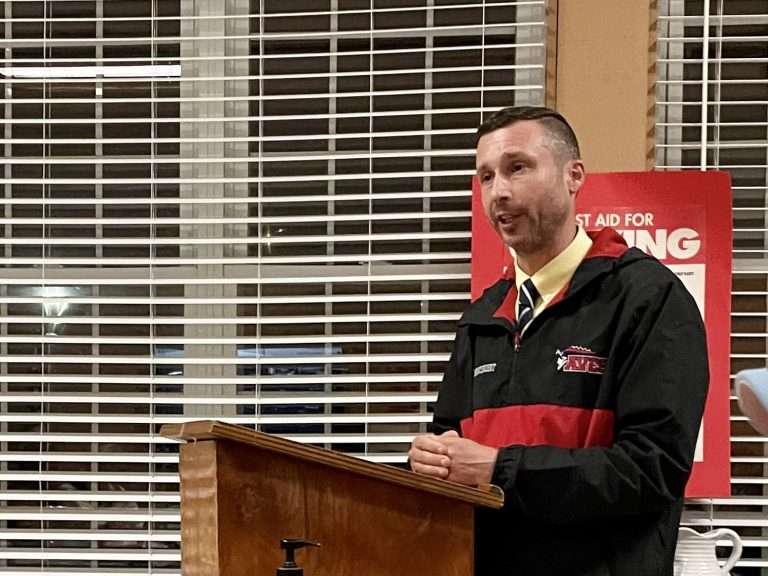
“The census data only looks at the town as a whole,” said water and sewer director Paul Mintz. “When you break it down into the hamlet areas — where our water districts are — you’re looking at a very different population.”
Those hamlets, he said, include more retirees, working-class families and renters than outlying areas, where larger properties and higher incomes can skew the overall average upward.
To document that disparity, the town has been conducting an income survey, beginning last year in Au Sable Forks. Early returns suggest the hamlet could qualify for a range of grants and subsidized loans through agencies such as the U.S. Department of Agriculture, New York State’s Environmental Facilities Corporation and Community Development Block Grant programs.
“So far, it looks like there’s a very strong likelihood Au Sable Forks will qualify,” Mintz said. “Upper Jay is looking promising as well. Jay is more uncertain at this point.”
However, response rates remain a challenge — and may be distorting early results.
 According to Mintz, higher-income households tend to respond first to voluntary surveys, potentially skewing initial data. That makes in-person outreach critical to reaching residents who might otherwise be underrepresented.
“The only way to really reach some folks — renters, or people who aren’t responding — is to go door to door,” he said.
Beginning the week of May 4, town staff, along with assistance from the nonprofit RCAP Solutions, will canvass neighborhoods in all three hamlets. Volunteers are also being sought to help expand the effort.
The survey asks residents to share household income information, something Mintz acknowledges can be sensitive.
“We’ve had people say, ‘I’m not giving you my income,’” he said. “But the reality is, these water districts belong to the people who live in them. The rates they pay in the future depend on what funding we can secure now.”
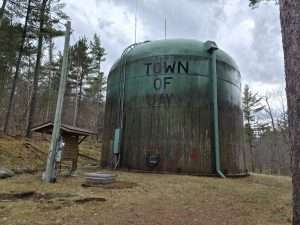
That funding could be significant. Infrastructure costs in the town are mounting, from water main repairs to mandated upgrades like the installation of water meters. A recent grant of just over $600,000 will help cover meter installation in Au Sable Forks, but the total project cost across all three districts is estimated at $2.2 million — leaving a substantial gap.
Other hamlets face even steeper challenges. Because they lack sewer systems, Jay and Upper Jay are ineligible for certain funding streams tied to wastewater improvements.
That makes qualifying for hardship-based programs even more critical, Mintz said.
“Anything we can do to access grants or low-interest financing helps keep costs down for residents,” he said. “Otherwise, those costs fall directly on the people in the district.”
The town’s effort reflects a broader issue faced by rural communities, where localized economic hardship can be hidden within larger municipal averages. Without more precise data, officials say, communities risk missing out on funding they genuinely need.
“We felt it would be remiss not to at least try,” Mintz said.
For residents, that means a knock on the door in the coming weeks — one that could ultimately determine how affordable essential services remain in the years ahead.